Miseria Mana and Abilities
Charge skills on hit, spend Will and Intelligence wisely, and time Church crit/vamp with mana gear.
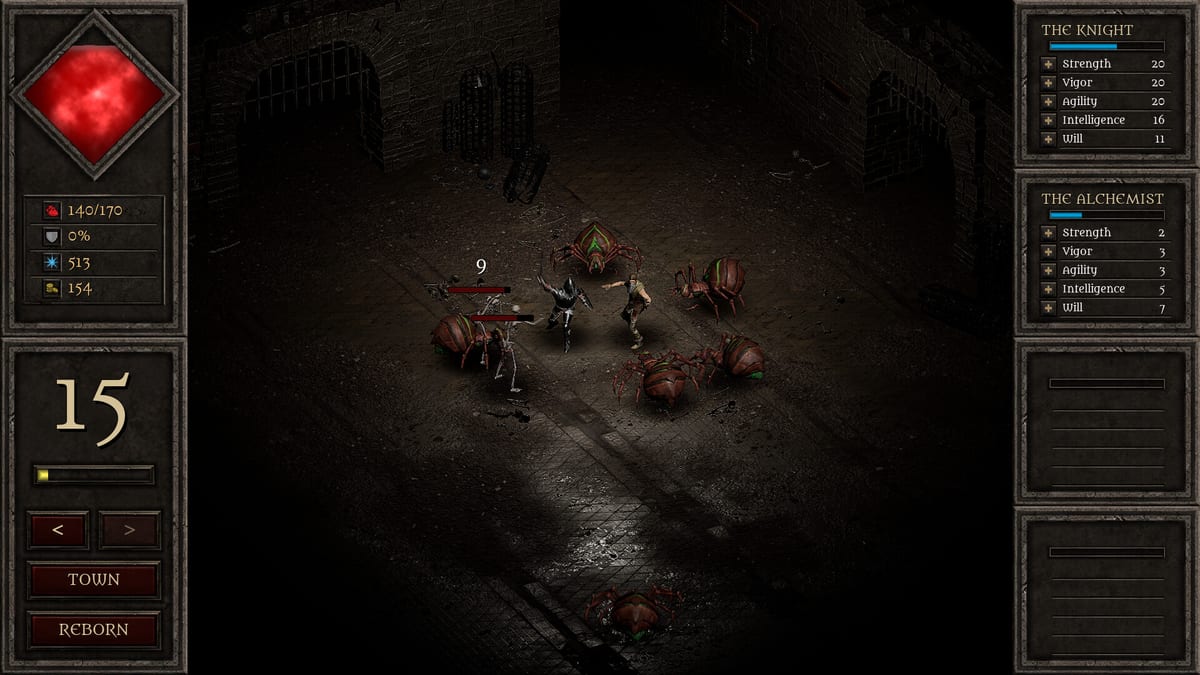
Auto combat in Miseria is not “only auto-attacks forever.” Party members charge mana, fire special abilities, and spike clear speed when those skills land on cooldown. This build page explains how mana generation on hit works with your level-up choices, blacksmith mana ring upgrades, and the Church’s crit/vamp layer—so you stop treating skills as random fireworks.
Pair this with Stats Explained for the attribute dictionary, Party and Characters for who actually casts, and Upgrade Priority so forge gold does not all vanish into swords while rings sit empty.
Mana generation on hit
In Miseria’s idle loop, hitting enemies feeds mana. More successful swings and sustained uptime mean more ability casts over a long floor. That is why attack cadence and survivability both matter for a “caster” plan: dead characters generate nothing, and glacial swingers charge skills too slowly to matter before the pack dies to basic attacks alone.
Practical reading of the screen:
- If abilities almost never fire, you are starved for hits, mana gear, or the stats that scale skill kits.
- If abilities fire but the party still dies mid-cast, buy Vigor and Church thorns before more Intelligence.
- If abilities fire constantly but floors still crawl, the bottleneck is damage multipliers (gear, Strength/Intelligence, Church damage), not raw cast count.
Mana-on-hit rewards stable farms. Parking on a floor you can clear cleanly for ten minutes will out-cast a heroic wipe on a wall floor every time.
Special abilities as the real burst layer
Special abilities are your scheduled burst inside an automatic fight. You do not aim them; you build the conditions that let them fire often and hit hard. Treat them as:
- Pack clear accelerators when rooms are wide and basic attacks feel spongy.
- Boss-phase tools when a single target outlasts normal swings.
- Identity pieces for recruits like the Alchemist once Strange Plant unlocks—see Party and Characters.
Do not chase ability fantasy on a Knight opener if the tooltips still scream physical Strength. Early game still belongs to Early Game Build habits. Graduate into mana investment when a kit clearly scales with Intelligence/Will or when ring upgrades show obvious mana returns.
Will and Intelligence investment
Intelligence is the headline skill stat for caster-leaning kits: ability potency, mana-oriented scaling, and Alchemist-style kits. Put points here when skills—not auto-attacks—are carrying boss timers.
Will supports the endurance and specialty side of resource fighting. When long rooms drain the party before the next cast cycle, Will belongs next to Vigor in your triage. Exact coefficients can shift with patches; always read the live tooltip, but the role stays stable: Intelligence makes skills hit, Will helps you stay in the fight long enough for the cycle to matter.
Spending rules that keep runs honest:
- Respect early soft caps (~20 range until Church lifts ceilings)—dumping overflow into off-stats is a trap (How to Play).
- Specialize per character. Mirror-cloning Will/Intelligence onto every slot wastes the Knight’s Strength identity.
- After Reborn, temporary points wipe. Do not over-invest a doomed run’s Intelligence if a prestige is one floor away—bank blessings instead with the Reborn planner.
Blacksmith mana ring upgrades
The blacksmith is not only blades and plates. Mana ring (and similar accessory) upgrades multiply how fast skills come online and how hard they land once your base stats exist. Common mistakes:
- Maxing weapons while rings lag two tiers behind, then concluding “abilities are weak.”
- Buying every ring equally across the party when only one caster is online.
- Ignoring rings entirely until mid game, then wondering why Church crit feels inconsistent.
Route gold with Upgrade Priority and blacksmith equipment notes: fix the bottleneck. If casts are rare, rings and hit uptime jump the queue. If casts are frequent but soft, Intelligence and Church damage nodes jump the queue.
Permanent Blacksmith access via the Church still comes first in most prestige plans—temporary ring levels mean nothing if you remake the forge every Reborn without the unlock. Rank that against spikes and magnet on the Church upgrades tier list.
Church crit and vamp interaction
Church crit and vamp nodes are late-mid spice, not day-one groceries. They interact with mana builds in specific ways:
- Crit multiplies the value of each swing and each ability hit. More mana casts means more chances for crit spikes—but only after your cast rate exists. Buying crit before you can fire skills reliably is backwards.
- Vamp (lifesteal-style sustain) rewards uptime. Ability-heavy floors that already keep you in melee range convert vamp into longer cast cycles. Vamp does not replace Vigor or thorns; it complements them when contact is constant.
Spend order reminder from the planner and tier list: Blacksmith permanence, Spikes/thorns, gold magnet, Alchemist, start XP—then crit/vamp and expensive caps. Mana rings on a starving economy still lose to magnet QoL that feeds the forge while you AFK.
Stage guide: when to lean mana
Pre-first Reborn: Touch mana stats lightly unless a kit demands them. Survive, unlock forge habits, learn cast rhythm visually.
Post-Alchemist: Split identity—Knight physical, Alchemist Intelligence/Will as tooltips indicate. Fund the caster’s rings.
Mid game (see Mid Game Build): Once Church economy and thorns are online, invest seriously in mana gear and crit/vamp only after cast rate feels real. Floor 19-style walls often punish glass casters; keep a Vigor floor.
Checklist before your next descent
- Can the party clear the farm floor without dying mid-cast?
- Are mana rings within one meaningful upgrade of your weapons?
- Is Intelligence/Will on the characters who scale with it?
- Have you avoided early crit/vamp before economy and thorns?
- Is a Reborn closer than another temporary ring rank?
Open the Builds Hub for stage plans, the Items Hub for forge detail, and the Tier List Hub for permanent node ranking. Mana and abilities turn Miseria from a pure auto-clicker fantasy into a rhythm of charged bursts—build the rhythm on purpose, and the abyss starts answering.
Frequently Asked Questions
Quick answers to the most common questions.
How does mana generate in Miseria?
Hits on enemies feed mana over time. Stable clear uptime and attack cadence raise how often special abilities fire on a floor.
Should I stack Intelligence on the Knight from minute one?
Usually no. Early Knight play favors Strength and enough Vigor. Deep Intelligence waits for skill-centric kits like the Alchemist path.
When do blacksmith mana rings matter?
As soon as abilities are part of your clear plan. If casts feel rare, prioritize rings alongside weapons instead of ignoring accessories.
When should I buy Church crit or vamp?
After core economy, thorns/spikes, and forge permanence. Crit and vamp amplify a working cast cycle; they do not create one.
Does Will replace Vigor for casters?
No. Vigor keeps you alive so mana-on-hit continues. Will supports endurance and specialty scaling—use both when long rooms drain the party.
Do mana investments survive Reborn?
Temporary levels and forge progress reset. Church nodes bought with Dark Blessings remain—plan crit/vamp as permanent layers, not run bandages.