Miseria Reborn Planner
Estimate Dark Blessings from floor depth, then spend them in a Church order that speeds every future run.
Reborn is the prestige heartbeat of Miseria. You reset floor progress, experience, and gold, keep Dark Blessings, and spend those blessings in the Church on permanent upgrades that survive every later cycle. The interactive planner below turns that decision into a short checklist instead of a guess in the dark.
How to use the planner
Enter the deepest floor you reached on the current run. The tool estimates Dark Blessings using a simple community pacing rule—roughly one blessing per floor of depth—so you can sketch a spend plan before you hit Reborn. Then walk the Church priority checklist: tick upgrades you already own, note the rough costs, and decide which S-tier nodes unlock next. Reset the checks whenever you start a fresh prestige plan.
Treat the number as a ceiling for planning, not a guaranteed dump of in-game math. Special floors, patches, and unfinished nodes can change the exact total. What matters is the spend order: buy tempo and unlocks first, then combat polish, then expensive stat caps.
Estimated Dark Blessings 13
Players typically earn about one Dark Blessing per floor of depth on Reborn. Treat this as a planning aid, not an exact dump of in-game math.
Church priority checklist
Church priorities that actually matter
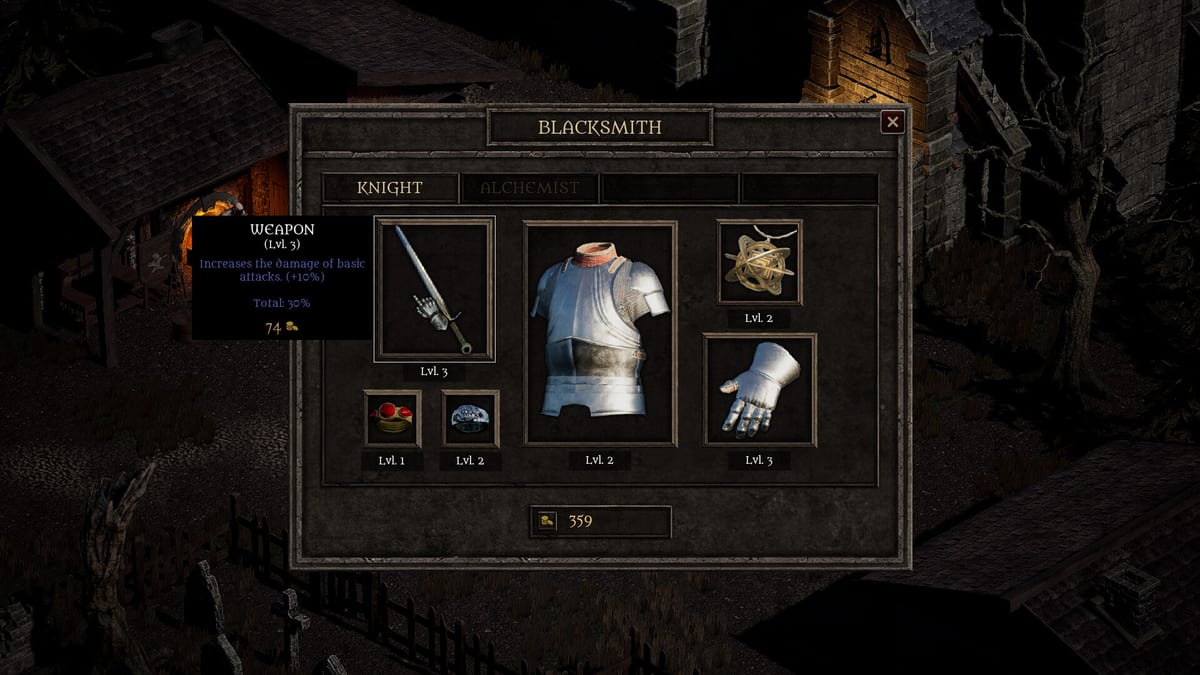
Early Church spending should remove friction from the idle loop. Permanent Blacksmith unlock is the classic first major target. Without it, every Reborn forces you to re-earn crafting access while your party is already trying to push deeper. Locking the forge as a permanent town feature means gold converted into gear stays part of your identity across runs.
Next, look at Spikes / thorns and the gold magnet. Spikes punish enemies for hitting you and quietly add damage while auto combat does the clicking. The magnet—and later auto-collect on new floors—keeps gold flowing while you are AFK or managing another window. In an idle incremental, lost gold pickup is lost forge progress, and lost forge progress is a shallower next floor.
Alchemist permanence belongs in the same early cluster once the forge and pickup quality-of-life are secure. Extra party utility and crafting-adjacent support compound faster than raw crit chance when your economy is still young. Start-with-bonus-XP after Reborn shortens the dead zone at the beginning of each loop so you return to interesting floors sooner.
Crit and life steal (vamp) are strong, but they are mid-plan combat upgrades. Buy them after the run already feels smooth: forge unlocked, gold coming in, Alchemist available, and XP kickstart online. They shine when your party can already stand on the floors where gear upgrades matter. Dumping blessings into crit before you can forge is how Mixed-feeling early runs happen—lots of shiny combat text, not enough economy.
Stat caps are late and expensive for a reason. Raising character ceilings is powerful once your blacksmith line, party slots, and Church foundation can feed those stats. Early on, a fifteen-blessing cap node often delays Spikes, magnet, or Alchemist and makes the next ten floors feel worse. Hold caps until you are deliberately pushing a deeper plateau.
For a ranked view of the same nodes, read the Church upgrades tier list. For the full prestige rules—what you lose, what you keep, and when to press the button—see How to Reborn. For who to field while those permanent unlocks land, use the early-game build.
A practical first-Reborn spend script
Most new players should treat the first meaningful Reborn as an unlock mission, not a damage race. Push while auto combat still clears floors without constant deaths, note your deepest floor in the planner, then aim blessings at:
- Permanent Blacksmith
- Spikes / thorns
- Gold magnet (and auto-collect when available)
- Alchemist permanence
- Start-of-run XP
- Crit and vamp only after the list above is stable
- Stat caps when the rest of the tree is no longer starving
If two nodes cost about the same and you are unsure, prefer the one that saves clicks or restores a town feature. Idle games punish busywork more than they punish a slightly lower crit roll.
How this page fits the rest of the wiki
This planner is featured because Reborn is the question players ask after the tutorial ends. Pair it with Getting Started if you still need the town loop, with Tools Hub if you want the category overview, and with Updates if you came from the demo and need the full-release context. Miseria is single-player only—no multiplayer—so every blessing decision is yours alone, for better or worse.
When a patch changes Church costs or blessing income, re-open this page, clear the checklist, and rebuild the plan from Blacksmith outward. The abyss rewards patience; the Church rewards a shopping list.
Frequently Asked Questions
Quick answers to the most common questions.
How accurate is the Dark Blessings estimate?
It is a planning aid based on roughly one blessing per floor of depth. Confirm your real total in the Church before you spend, especially after patches.
What should I buy first in the Church?
Prioritize permanent Blacksmith unlock, then Spikes/thorns and gold magnet, then Alchemist and start XP. Save crit, vamp, and expensive stat caps for later.
When should I Reborn in Miseria?
Reborn when floor clears slow down and the next Church unlock would speed the following run more than clinging to the current gold pile. See How to Reborn for timing details.
Do Church upgrades reset on Reborn?
No. Dark Blessings spent in the Church are permanent. You lose XP, gold, and floor progress, not purchased Church nodes.
Is there multiplayer Reborn planning?
No. Miseria is single-player with no multiplayer, so the planner assumes one party and one Church tree.